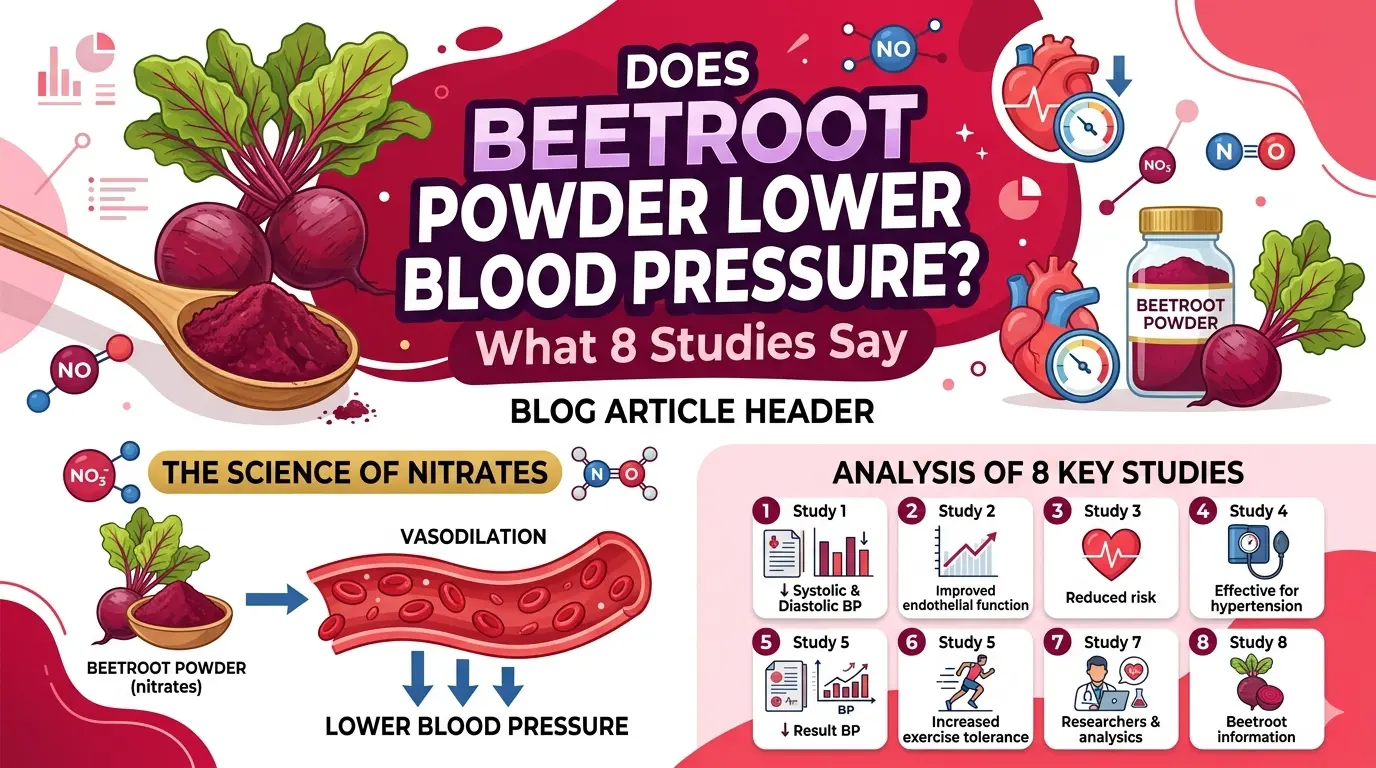
Beetroot powder has surged in popularity as a natural blood pressure support supplement, and for good reason. Unlike many trendy supplements that lack clinical evidence, beetroot powder has a robust body of research behind its cardiovascular benefits — particularly its ability to lower blood pressure through the nitric oxide pathway.
In this article, we cut through the marketing noise and examine what the clinical evidence actually says about beetroot powder for blood pressure, including how it works, optimal dosing, and what you can realistically expect.
The Nitric Oxide Pathway: How Beetroot Lowers Blood Pressure
To understand why beetroot powder works, you need to understand the nitric oxide (NO) pathway. Nitric oxide is a signaling molecule produced by the endothelium — the thin layer of cells lining your blood vessels. When NO is released, it signals the smooth muscle in artery walls to relax, causing vasodilation (widening of blood vessels) and consequently lowering blood pressure.
Beetroot is exceptionally rich in dietary nitrates (NO3-). When you consume beetroot powder, bacteria in your mouth convert these nitrates to nitrites (NO2-). These nitrites are then further reduced to nitric oxide in the stomach and throughout the vascular system. This "nitrate-nitrite-NO" pathway is the primary mechanism by which beetroot influences blood pressure.
What makes this pathway particularly interesting is that it functions independently of the body's primary nitric oxide production system (the eNOS enzyme). This means beetroot-derived nitric oxide can help compensate for impaired endothelial function — a common condition in individuals with hypertension, aging, or cardiovascular risk factors.
What Do the Clinical Studies Show?
The evidence supporting beetroot powder (and beetroot juice) for blood pressure is substantial. Here's a summary of the key clinical findings:
The landmark 2015 study published in the Journal of Nutrition found that daily beetroot juice consumption for 4 weeks reduced systolic blood pressure by 4-5 mmHg in hypertensive individuals. The study also showed improvements in arterial stiffness — a marker of cardiovascular aging.
A 2013 meta-analysis in the American Journal of Clinical Nutrition pooled data from 16 clinical trials and concluded that nitrate-rich beetroot supplementation reduced systolic blood pressure by an average of 4.4 mmHg and diastolic by 2.3 mmHg.
A 2018 randomized controlled trial in Hypertension found that beetroot supplementation reduced blood pressure in a dose-dependent manner, with higher nitrate doses producing greater reductions. Participants consuming 400 mg of dietary nitrate daily showed the most significant improvements.
An acute study demonstrated measurable blood pressure reductions within 2-3 hours of consuming a single dose of beetroot, with peak effects occurring at 3-4 hours post-consumption.
It's worth noting that the effects tend to be more pronounced in individuals with existing hypertension (Stage 1 or Stage 2) compared to those with normal blood pressure. The magnitude of benefit is also greater when beetroot supplementation is combined with other cardiovascular-supporting strategies like exercise and dietary improvements.
Beetroot Powder vs. Beetroot Juice
Most early clinical trials used beetroot juice rather than powder, but the two forms share the same active compound — inorganic nitrate. Beetroot powder offers several practical advantages over juice:
Concentration: Powdered beetroot is typically more concentrated than juice, meaning you can get a therapeutically relevant dose of nitrates in a small capsule or scoop rather than drinking several ounces of juice daily.
Shelf stability: Powder has a significantly longer shelf life than fresh beetroot juice, making it more convenient for daily supplementation.
Taste: Beetroot juice has a strong, earthy-sweet flavor that not everyone enjoys. Powder can be mixed into smoothies, shakes, or taken in capsule form, providing more flexibility.
Cost: On a per-dose basis, beetroot powder is typically more cost-effective than buying fresh beets or commercial beetroot juice.
However, juice retains the full spectrum of whole-food compounds, including betalains and polyphenols that may provide additional anti-inflammatory benefits beyond the nitrate content alone. Both forms are effective, and the best choice depends on your personal preferences and budget.
Optimal Dosage and Usage
Based on the clinical evidence, the optimal dose of beetroot powder for blood pressure support provides approximately 300-500 mg of dietary nitrate daily. This typically translates to:
- Beetroot powder (standardized): 5-10 grams daily, depending on nitrate concentration
- Beetroot juice: 250-500 mL (8-16 oz) daily
- Whole beets: 1-2 medium beets daily (approximately 300-500 mg nitrate)
For timing, taking beetroot powder in the morning on an empty stomach may maximize absorption, as stomach acidity plays a role in the nitrate-to-nitrite conversion process. However, the effects are cumulative with consistent daily use, so the most important factor is daily consistency rather than precise timing.
When choosing a beetroot powder supplement, look for products that specify the nitrate content per serving. Not all beetroot powders are created equal — some are heavily processed and may have reduced nitrate levels. Organic, cold-pressed, or low-heat processed powders generally retain higher nitrate concentrations.
Potential Side Effects and Considerations
Beetroot powder is generally well-tolerated, with few reported side effects. However, there are some considerations:
Beeturia: A harmless condition where urine or stool turns pink or red after consuming beet products. This occurs in approximately 10-14% of the population and is not medically concerning.
Kidney stones: Beets are high in oxalates, which can contribute to kidney stone formation in susceptible individuals. If you have a history of calcium oxalate kidney stones, consult your physician before using concentrated beetroot supplements.
Medication interactions: Because beetroot lowers blood pressure, it may enhance the effects of blood pressure medications. If you're taking antihypertensive drugs, monitor your blood pressure closely and consult your healthcare provider to determine if dosage adjustments are needed.
Nitrate sensitivity: Individuals who take PPI (proton pump inhibitor) medications may have reduced ability to convert nitrate to nitric oxide, potentially reducing the effectiveness of beetroot supplementation.
The Bottom Line
Beetroot powder is one of the few natural supplements for blood pressure that has genuinely robust clinical evidence behind it. The nitric oxide pathway is well-understood, the blood pressure reductions are clinically meaningful, and the safety profile is excellent.
For optimal results, combine beetroot supplementation with other evidence-based strategies like the DASH diet and regular exercise. For comprehensive cardiovascular support that includes beetroot alongside other heart-health botanicals, explore our Cardio Slim Tea review. And for a deeper look at the complete picture of heart health risk factors, check out our guide on lowering homocysteine naturally.